Introduction
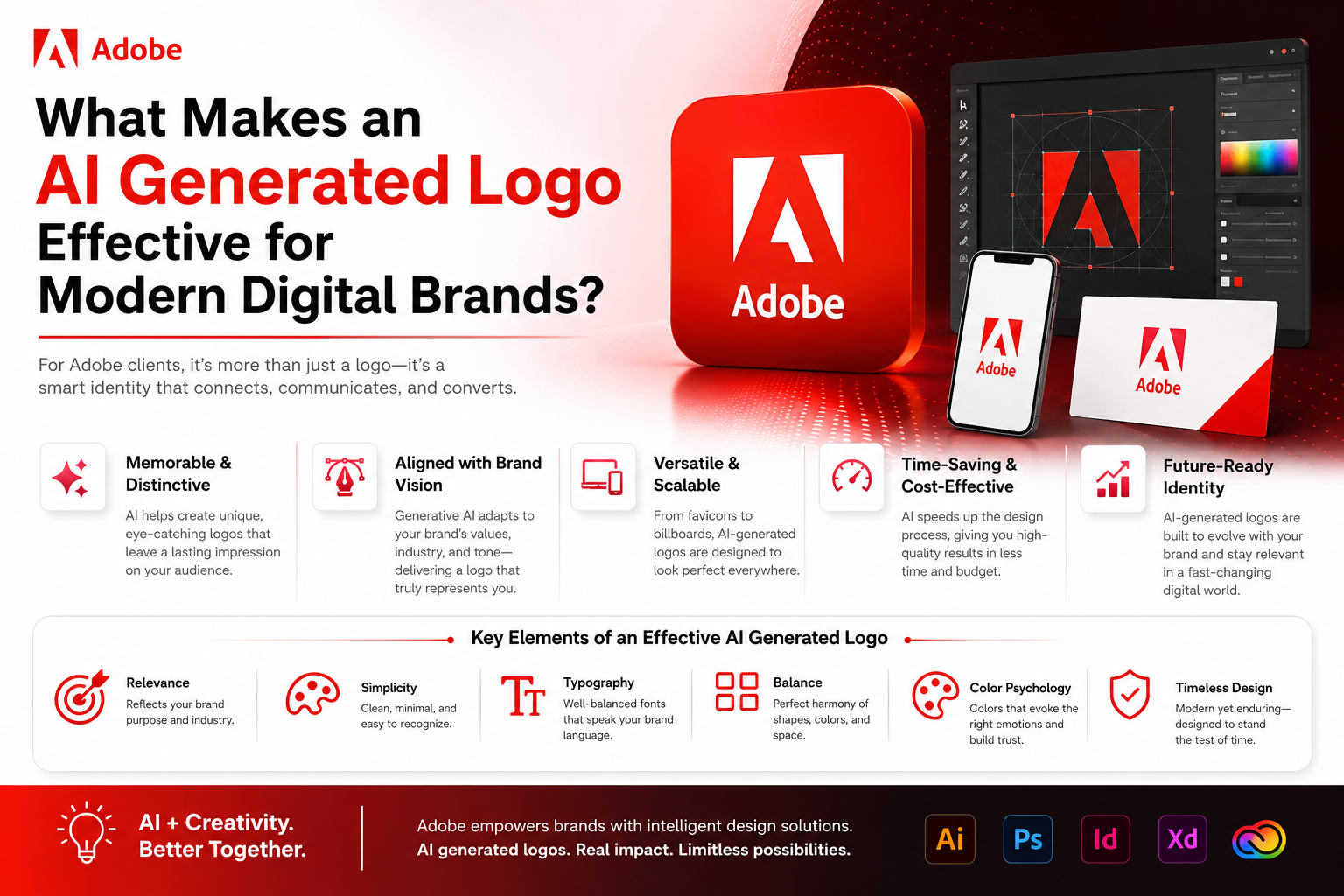
An AI generated logo can help businesses create professional visual identities faster and more affordably than traditional design methods. However, not every AI-created logo succeeds in building brand recognition or trust. The most effective logos combine smart automation with proven branding principles, ensuring they remain memorable, scalable, and relevant across digital platforms.
As digital-first businesses continue to grow, logo design has become more important than ever. From social media profiles to mobile apps and websites, a logo often creates the first impression customers have of a brand. Understanding what makes an AI generated logo effective can help businesses make better branding decisions and create stronger connections with their audiences.
What Is an AI Generated Logo?
An AI generated logo is a logo created using artificial intelligence algorithms that analyze design patterns, branding preferences, color psychology, and user inputs to generate visual identity concepts.
Unlike traditional design processes that may require multiple rounds of revisions, AI logo tools can create numerous options within minutes. Modern AI systems use machine learning to identify design trends and apply established branding principles to logo creation.
Definition: An AI generated logo is a brand mark produced with the assistance of artificial intelligence software that automates parts of the design process while incorporating user preferences and branding goals.
Key Takeaway: AI generated logos use machine learning and design data to create branding assets quickly, but effectiveness still depends on strategic design choices.
Why Logo Effectiveness Matters for Digital Brands
Modern digital brands compete in crowded online environments. Whether a company operates an e-commerce store, SaaS platform, blog, or mobile application, its logo serves as a visual shortcut for recognition.
Research from the Nielsen Norman Group consistently highlights the importance of visual recognition and user trust in digital experiences. Similarly, branding experts at HubSpot emphasize that consistent visual branding improves customer recall and engagement.
An effective logo contributes to:
- Brand recognition
- Customer trust
- Professional credibility
- Visual consistency
- Marketing performance
- Social media visibility
Digital audiences often make judgments within seconds. A poorly designed logo can undermine an otherwise excellent product or service.
Key Takeaway: A logo is not just a graphic. It is a strategic branding asset that influences trust, recognition, and engagement.
What Design Elements Make an AI Generated Logo Effective?
Simplicity
The strongest logos are often the simplest. Overly complex designs become difficult to recognize across different screen sizes and platforms.
Examples of effective simplicity include:
- Clean typography
- Minimal shapes
- Limited visual elements
- Clear focal points
AI tools sometimes generate intricate designs because they have access to vast design datasets. Businesses should refine outputs to maintain clarity.
Memorability
A logo should be easy to remember after a brief interaction.
Characteristics of memorable logos include:
- Unique visual identity
- Distinctive shapes
- Consistent styling
- Strong visual hierarchy
Relevance
The design should reflect the brand’s industry, audience, and values.
For example:
| Industry | Design Characteristics |
| Technology | Modern, clean, innovative |
| Finance | Stable, trustworthy, professional |
| Education | Accessible, intelligent, welcoming |
| E-commerce | Friendly, recognizable, scalable |
Scalability
An effective logo must remain recognizable across:
- Mobile screens
- Websites
- Social media avatars
- Business cards
- App icons
- Digital advertisements
Key Takeaway: Simplicity, memorability, relevance, and scalability remain essential design principles regardless of whether AI or humans create the logo.
How AI Improves the Logo Design Process
Artificial intelligence has transformed branding workflows by increasing speed and accessibility.
Faster Concept Development
AI can generate multiple logo concepts within minutes. This allows businesses to explore a wider range of creative directions before selecting a final design.
Data-Driven Design Suggestions
Many AI systems analyze:
- Industry trends
- Popular color schemes
- Typography preferences
- User behavior patterns
This can provide useful starting points for branding decisions.
Lower Entry Costs
Startups and small businesses often face budget constraints. AI logo generators offer an affordable alternative to custom agency work.
Increased Experimentation
Businesses can test:
- Different fonts
- Layouts
- Colors
- Icons
- Brand personalities
without significant additional cost.
Key Takeaway: AI speeds up logo creation and lowers costs, but strategic review remains essential for long-term branding success.
Common Mistakes to Avoid When Using AI Generated Logos
While AI tools offer significant advantages, they can also produce ineffective results when used incorrectly.
Choosing Generic Designs
Many AI platforms rely on common design patterns. Without customization, logos may resemble competitors.
Avoid:
- Overused icons
- Generic symbols
- Trend-only aesthetics
- Similar color palettes
Ignoring Brand Personality
A logo should reflect:
- Brand mission
- Company values
- Target audience
- Market positioning
AI-generated options should be evaluated against these factors.
Prioritizing Style Over Function
Visually impressive designs may perform poorly in practical applications.
Always test logos across:
- Mobile devices
- Website headers
- Social platforms
- Dark backgrounds
- Print materials
Overcomplicating the Design
Adding too many elements often reduces effectiveness.
The best logos communicate quickly and clearly.
Key Takeaway: Customization and strategic evaluation help prevent AI-generated logos from becoming generic or ineffective.
How Color Psychology Influences AI Generated Logos
Color plays a major role in brand perception.
AI systems frequently recommend color palettes based on industry standards and consumer psychology.
Common Color Associations
| Color | Common Brand Message |
| Blue | Trust, reliability |
| Green | Growth, sustainability |
| Red | Energy, urgency |
| Black | Luxury, sophistication |
| Orange | Creativity, enthusiasm |
| Purple | Innovation, imagination |
While these associations are useful, businesses should align color choices with their unique positioning rather than blindly following trends.
Key Takeaway: Effective color selection strengthens brand perception and improves recognition across digital channels.
Typography and AI Logo Effectiveness
Typography often determines whether a logo feels professional or amateur.
When evaluating AI-generated concepts, consider:
Readability
Text should remain legible at small sizes.
Brand Alignment
Font choices should match brand personality.
Examples:
- Sans-serif fonts often communicate innovation.
- Serif fonts suggest tradition and authority.
- Script fonts convey elegance or creativity.
Consistency
Typography should align with broader branding materials, including websites, marketing campaigns, and social media assets.
Key Takeaway: Strong typography improves logo clarity and reinforces overall brand identity.
How Digital-First Brands Benefit Most from AI Generated Logos
Digital brands operate in environments where visual impressions happen quickly.
Businesses that particularly benefit include:
- SaaS startups
- Content websites
- E-commerce stores
- Mobile app developers
- Online education platforms
- Digital agencies
Content-driven platforms such as Quicks Topics emphasize accessible information, technology trends, business insights, and digital innovation. For brands operating in these spaces, a modern, clean, and adaptable logo supports credibility and user trust while enhancing visibility across multiple digital touchpoints.
Key Takeaway: Digital brands need logos optimized for screens, social platforms, and mobile experiences rather than traditional print-only applications.
How to Evaluate an AI Generated Logo Before Launch
Use this checklist before finalizing a logo:
Logo Evaluation Checklist
- Is it easy to recognize?
- Is it memorable?
- Does it reflect brand values?
- Is it scalable across devices?
- Does it remain clear in black and white?
- Does it stand out from competitors?
- Is the typography readable?
- Does the color palette support brand positioning?
If the answer is “yes” to most of these questions, the logo is likely positioned for success.
Key Takeaway: Testing and evaluation are essential steps that transform a generated design into an effective branding asset.
Frequently Asked Questions
Is an AI generated logo suitable for professional businesses?
Yes. Many businesses use AI-generated logos successfully when the designs are refined and aligned with brand strategy.
Summary: AI generated logos can be professional when customized and evaluated properly.
Can an AI generated logo be unique?
Yes, but uniqueness often requires customization beyond the initial AI output.
Summary: AI can provide strong starting concepts, but personalization improves originality.
Are AI generated logos good for startups?
Yes. They provide affordable branding solutions while enabling rapid experimentation.
Summary: Startups often benefit from AI-generated logos due to speed and cost efficiency.
Do AI generated logos perform well on social media?
Yes. Many modern AI tools optimize designs for digital applications, including profile images and mobile displays.
Summary: AI generated logos can perform well on social platforms when designed for scalability.
Should businesses modify AI-generated designs?
In most cases, yes. Refinement helps align the logo with brand goals and improves distinctiveness.
Summary: Strategic customization typically produces stronger branding results.
Conclusion
An AI generated logo becomes effective when it combines the speed of artificial intelligence with the fundamentals of great branding. Simplicity, memorability, scalability, strong typography, and thoughtful color selection remain critical regardless of how the logo is created.
For modern digital brands, AI offers a powerful starting point, but lasting success depends on strategic evaluation and refinement. Businesses that treat AI as a design partner rather than a complete replacement for branding strategy are more likely to create logos that build trust, strengthen recognition, and support long-term growth.
Summary: The most effective AI generated logo is not simply automated. It is strategically refined, aligned with brand goals, and optimized for modern digital experiences.