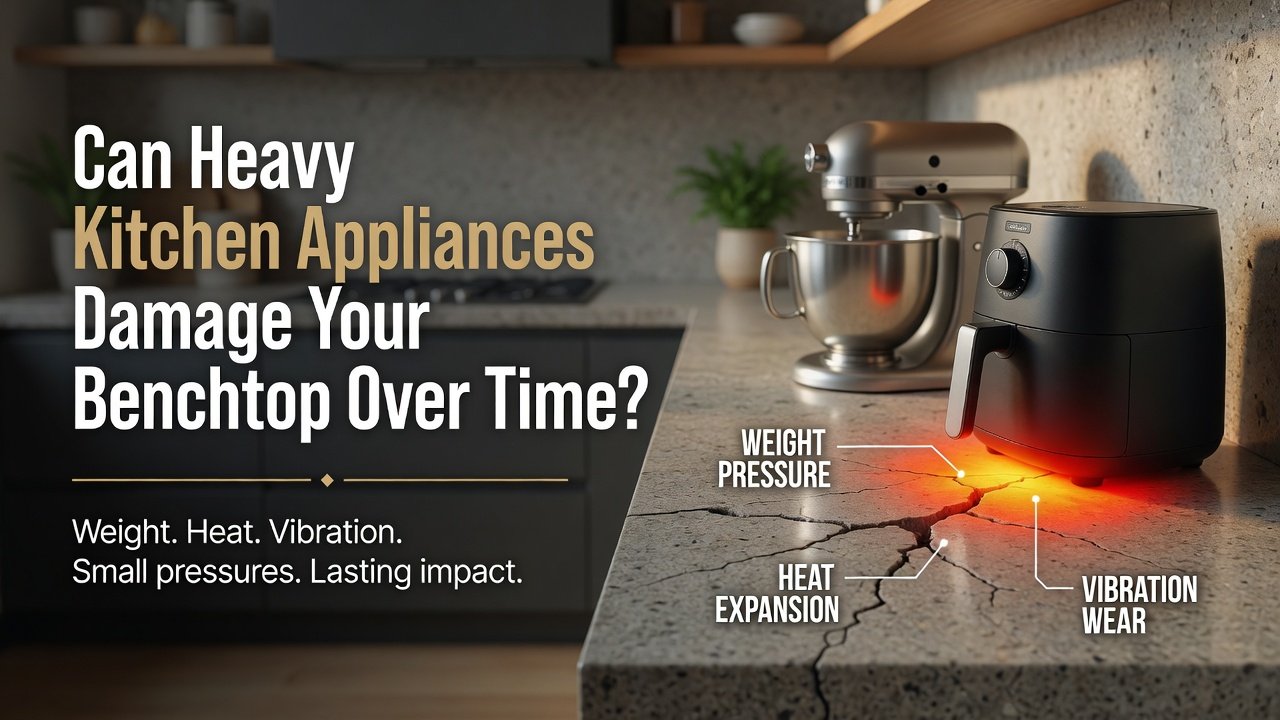
Heavy Appliances Can Put Constant Pressure on Your Benchtop
Modern kitchens are filled with appliances that make everyday cooking easier. Stand mixers, coffee machines, air fryers, espresso machines, food processors and even compact ovens often remain on the benchtop for convenience. While these appliances may seem harmless, their combined weight can place continuous stress on the surface over time.
Most quality benchtops are designed to handle normal household use, but problems can develop when heavy appliances are concentrated in one area, dragged across the surface or positioned on unsupported sections of the benchtop. Understanding how weight affects different materials can help homeowners prevent unnecessary damage and extend the life of their kitchen surfaces.
How Damage Occurs
Heavy kitchen appliances do not usually damage a benchtop simply because of their weight. Instead, problems often arise from a combination of constant pressure, vibration, improper placement and inadequate structural support beneath the surface.
Large coffee machines, stand mixers and blenders generate regular vibration while operating. Although these vibrations are generally minor, repeated movement over months or years may contribute to wear around unsupported sections, joins or vulnerable edges. Appliances that are frequently pushed or dragged across the surface may also create scratches or place unnecessary stress on corners and cut-outs.
Another factor is concentrated loading. Placing a heavy appliance on a narrow section of the benchtop or near an unsupported overhang increases localised pressure. Even durable materials require proper cabinet support underneath to distribute weight evenly. Installation guidance for stone benchtops generally recommends that cabinetry and substrates be capable of supporting both the weight of the benchtop and any additional loads from appliances, with heavier appliances supported by cabinet framing where appropriate.
One reason many homeowners choose sintered stone is its high density, low porosity, scratch resistance and heat tolerance. These characteristics make it well suited to busy kitchens. However, like any rigid surface, it still relies on correct fabrication, installation and support to perform well over the long term. Poor installation or concentrated impact can still lead to damage despite the material’s strength.
Signs to Watch For
Damage caused by heavy appliances often develops gradually rather than appearing overnight. Small warning signs may indicate that the surface is experiencing ongoing stress.
Tiny chips around exposed edges are among the first indicators. Corners, sink cut-outs and appliance storage areas are particularly vulnerable because these locations experience frequent contact and occasional impacts from heavy equipment.
Hairline cracks can also appear if excessive weight is placed on unsupported sections or if the underlying cabinetry shifts over time. Although these cracks may initially seem minor, they can expand with continued use if the underlying cause is not addressed.
Homeowners should also watch for uneven joins, movement between adjoining slabs or visible stress marks around appliance locations. These signs may indicate that the supporting structure beneath the benchtop requires attention rather than the surface material itself.
Edge damage deserves particular attention because exposed edges receive the greatest impact during everyday kitchen use. Accidentally knocking a heavy appliance against a corner may cause chipping even on highly durable materials.
Prevention Tips
Preventing appliance-related damage is usually straightforward with a few practical habits.
Heavy appliances should always be placed on well-supported sections of the benchtop rather than over unsupported overhangs or narrow extensions. Even weight distribution reduces concentrated stress and helps the surface perform as intended.
Instead of dragging appliances across the benchtop, they should be lifted whenever possible. Sliding heavy equipment repeatedly can scratch the finish and increase wear, particularly near exposed edges.
Protective mats or rubber feet beneath frequently used appliances can minimise vibration while reducing friction against the surface. They can also help prevent minor movement during operation, especially for mixers or appliances with powerful motors.
Regularly checking that appliance feet remain level is another simple way to reduce unnecessary pressure. Uneven contact points can create concentrated loading that places additional stress on one section of the benchtop.
Homeowners should also avoid using the benchtop as temporary support for unusually heavy objects during renovations or maintenance work. Standing on the surface or placing construction equipment directly on the benchtop may exceed its intended load capacity.
Professional Advice
Choosing the right material is only part of achieving long-lasting performance. Professional installation is equally important because even the strongest surface depends on proper structural support beneath it.
Many homeowners select sintered stone because it offers excellent resistance to scratches, stains, heat and everyday wear. Its low-porosity structure also makes routine cleaning relatively straightforward. However, experienced fabricators understand that sintered stone requires precise handling during transport, cutting, edge finishing and installation to minimise stress around corners and cut-outs.
Cabinet alignment, substrate quality and support beneath appliances all contribute to long-term durability. Professional installers ensure the benchtop is evenly supported across its entire length, helping reduce the risk of cracking or movement under normal household loads.
Protect Your Benchtop for Years to Come
Heavy kitchen appliances are an essential part of modern living, but they should not be overlooked when planning or maintaining a kitchen. Continuous weight, vibration, poor placement and inadequate support can gradually affect even high-quality surfaces if left unaddressed.
Investing in durable materials such as sintered stone, ensuring professional installation and positioning appliances carefully can help protect the benchtop for many years. A little attention to appliance placement today can preserve both the appearance and structural integrity of the kitchen well into the future.
FAQs
Can heavy kitchen appliances crack a benchtop?
They can if excessive weight is concentrated on unsupported areas or if the underlying cabinetry does not provide adequate support.
Is sintered stone strong enough for heavy appliances?
Yes. Sintered stone is highly durable and resistant to scratches, heat and stains, but it still requires correct installation and structural support to reduce the risk of damage.
Can appliance vibration damage a benchtop?
Repeated vibration alone is unlikely to cause immediate damage, but over time it may contribute to wear if appliances are poorly positioned or the surface is inadequately supported.
Should I drag heavy appliances across the benchtop?
No. Lifting appliances rather than sliding them helps prevent scratches and reduces stress on edges and corners.
What areas of a benchtop are most vulnerable?
Edges, corners, sink cut-outs, unsupported overhangs and narrow sections are generally the most susceptible to chips or cracks caused by impact and concentrated loads.
How can I protect my benchtop from appliance damage?
Place heavy appliances on well-supported areas, distribute weight evenly, use protective mats where appropriate and ensure the benchtop has been professionally installed with adequate structural support.