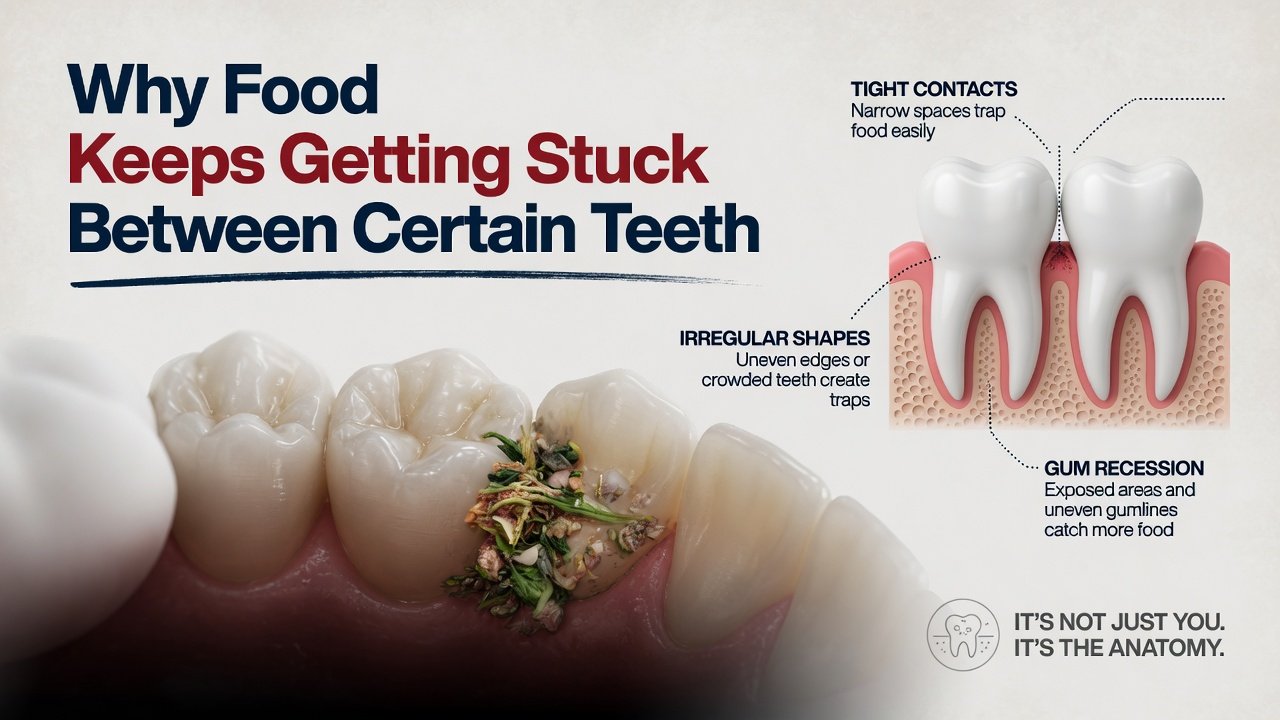
When Food Gets Trapped Every Time You Eat
Everyone experiences food getting stuck between their teeth occasionally, especially after eating fibrous meat, popcorn or leafy vegetables. However, if food repeatedly becomes trapped in the same spot after almost every meal, it may be more than a simple annoyance. Consistent food impaction often indicates that something has changed in the way your teeth, gums or dental restorations fit together.
Although the discomfort may seem minor at first, ignoring the problem can allow bacteria and plaque to accumulate in hard-to-clean areas. Over time, this can increase the risk of tooth decay, gum irritation and other oral health issues. Identifying the underlying cause early can help prevent more complex dental problems later.
Common Causes of Food Getting Stuck Between Teeth
One of the most common reasons food becomes trapped is the presence of small gaps between neighbouring teeth. These spaces, sometimes called open contacts, can develop naturally over time or result from gradual tooth movement. Even a slight change in spacing may be enough for food particles to become lodged repeatedly in the same area.
Worn or damaged fillings are another frequent cause. As fillings age, they can wear down, crack or pull away from the tooth, creating small spaces where food can collect. Poorly contoured restorations may also alter the normal contact between teeth, making food impaction more likely.
Tooth decay can also contribute to the problem. Cavities may create rough or uneven surfaces that catch food during chewing. Because decay between teeth is often difficult to see without a dental examination or X-rays, recurring food traps may be one of the first noticeable signs.
Gum recession is another important factor. As gum tissue gradually pulls away from the teeth, larger spaces can form near the gumline. These areas can collect food debris and plaque, making cleaning more difficult. Gum disease and bone loss may increase these gaps over time.
Teeth naturally shift throughout life, particularly after tooth loss, orthodontic treatment or changes in bite alignment. These movements can alter how neighbouring teeth meet, creating new spaces where food becomes trapped. Bite changes caused by tooth wear or grinding may also affect the way chewing forces push food between teeth.
Why It Should Not Be Ignored
Food that remains trapped between teeth creates an ideal environment for bacteria. As food particles break down, plaque can accumulate more easily, increasing the likelihood of tooth decay in areas that are difficult to clean thoroughly.
Persistent food impaction can also irritate the gums. Repeated pressure from trapped food may cause inflammation, tenderness, swelling or bleeding during brushing and flossing. If bacteria continue to build up, gum disease may gradually develop, leading to deeper pockets and further food trapping.
Bad breath is another possible consequence. Food debris trapped between teeth can break down over time, allowing bacteria to produce unpleasant odours. Even people with otherwise good oral hygiene may notice persistent bad breath if food repeatedly becomes lodged in one area.
Ignoring recurring food traps may also result in discomfort while eating. Some people experience pressure, soreness or sensitivity each time food becomes impacted, making meals less comfortable and leading to frequent use of toothpicks or floss throughout the day.
How a Dentist Haymarket Can Help
If food regularly becomes trapped between the same teeth, a thorough dental examination can help identify the underlying cause. A Dentist Haymarket can assess the contact points between teeth, examine existing fillings or restorations, evaluate gum health and check for signs of decay or tooth movement.
Dental X-rays may also be recommended where appropriate to detect cavities hidden between teeth, identify bone loss or evaluate restorations that cannot be fully assessed during a visual examination. Understanding the exact reason for the food trap allows treatment to focus on correcting the underlying problem rather than simply managing the symptoms.
Professional Solutions for Long-Term Relief
The most appropriate treatment depends on the cause of the food impaction. If a worn or faulty filling has created an open contact, replacing the restoration may restore the normal contact between the teeth and reduce food trapping. Similarly, damaged crowns or other restorations may be reshaped or replaced to improve their fit.
When tooth decay is responsible, restoring the affected tooth can eliminate rough surfaces that collect food while protecting the tooth from further damage.
If shifting teeth or bite changes are contributing to the problem, orthodontic treatment may be considered to improve alignment and close unnecessary gaps. Where gum recession or periodontal disease is involved, improving gum health through professional periodontal care may reduce inflammation and help manage the condition before it progresses further.
In some situations, multiple factors contribute to food trapping, requiring a combination of restorative, periodontal and orthodontic care to achieve lasting improvement.
Do Not Ignore Persistent Food Traps
Occasionally removing food from between your teeth is normal. However, when food becomes trapped in the same location every day, it often signals that something within the mouth has changed. Addressing the cause early can help reduce the risk of tooth decay, gum disease, persistent bad breath and ongoing discomfort.
If this issue has become a regular part of your daily routine, visiting a Dentist Haymarket for a comprehensive examination can help identify the source of the problem and recommend suitable treatment before more significant oral health complications develop.
FAQs
Why does food always get stuck between the same two teeth?
This usually indicates an underlying issue such as an open contact between the teeth, a worn filling, gum recession or slight tooth movement.
Can food getting stuck between teeth cause cavities?
Yes. Trapped food can encourage plaque accumulation, increasing the risk of decay in areas that are difficult to clean properly.
Is gum recession responsible for food traps?
It can be. As gums recede, larger spaces may develop near the gumline, allowing food particles to collect more easily.
Can an old filling cause food to become trapped?
Yes. Worn, cracked or poorly fitting fillings may create spaces that repeatedly catch food during meals.
Will flossing alone solve the problem?
Flossing removes trapped food, but it does not correct structural problems such as gaps, faulty restorations or shifting teeth that cause repeated food impaction.
When should I see a dentist about food getting stuck?
If food regularly becomes trapped in the same location, especially when accompanied by discomfort, bleeding gums or bad breath, a dental examination is recommended to determine the underlying cause.