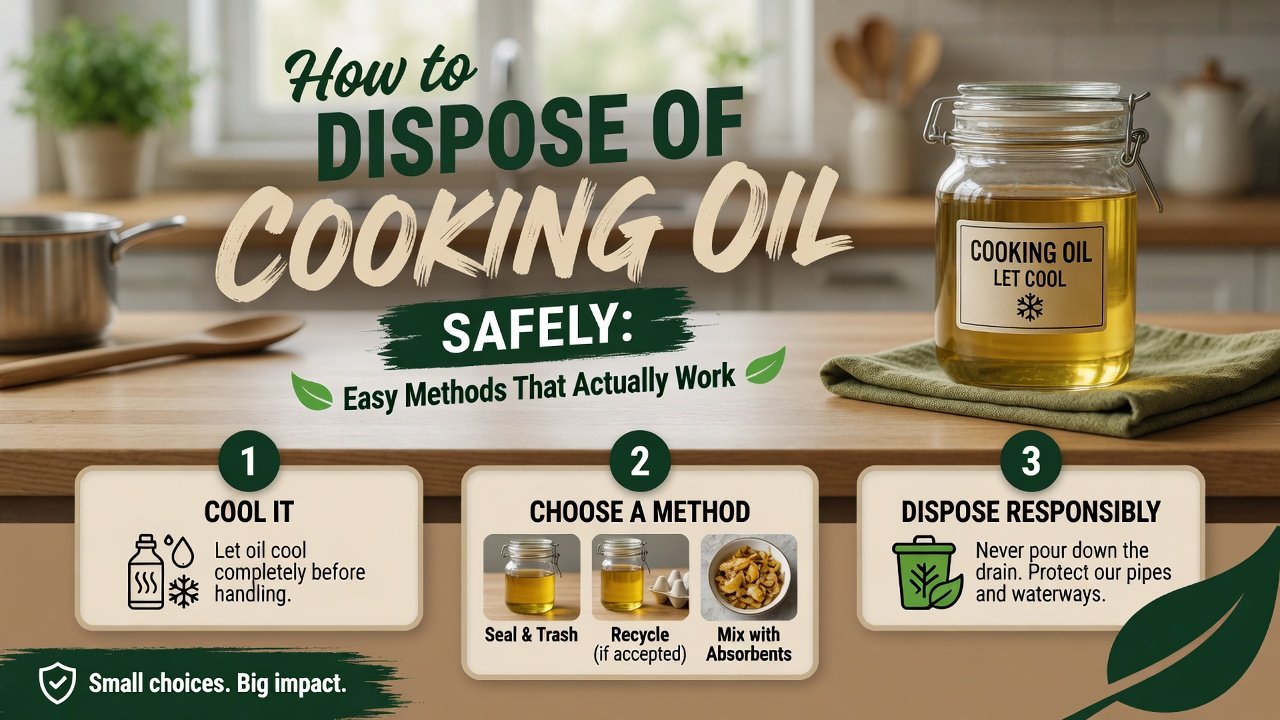
Cooking oil is a common kitchen essential, but getting rid of used oil the wrong way can create serious problems. Many people pour leftover frying oil into the sink, toilet, or outside without realizing that even small amounts can damage plumbing systems and harm the environment.
Whether you have a small amount of oil left after frying food or a large container of used cooking oil, proper disposal is important. The good news is that there are simple and safe ways to handle it.
This guide explains how to dispose of cooking oil, what mistakes to avoid, and the best methods for recycling, reusing, or throwing away used oil responsibly.
Why Proper Cooking Oil Disposal Matters
Used cooking oil may look harmless, but it can cause major issues when it is not handled correctly.
How cooking oil damages drains and plumbing
Cooking oil does not behave like regular liquid waste. When it enters a drain, it may seem to flow away, but as it cools, it becomes thicker and can stick to the inside of pipes.
Over time, oil combines with food scraps, grease, and other waste, creating blockages. These clogs can lead to:
- Slow drains
- Bad smells
- Pipe damage
- Expensive plumbing repairs
Even pouring oil with hot water afterward does not completely solve the problem because the oil can harden deeper inside the pipes.
Environmental problems caused by pouring oil outside
Dumping cooking oil onto soil, grass, or outdoor areas can damage the environment. Oil can prevent water and oxygen from reaching plants and may contaminate nearby water sources.
When oil reaches rivers, lakes, or drainage systems, it can create pollution and affect wildlife.
Why responsible disposal protects water systems
Proper disposal helps keep household plumbing working and reduces pollution. Recycling or safely throwing away used cooking oil keeps harmful waste out of water systems.
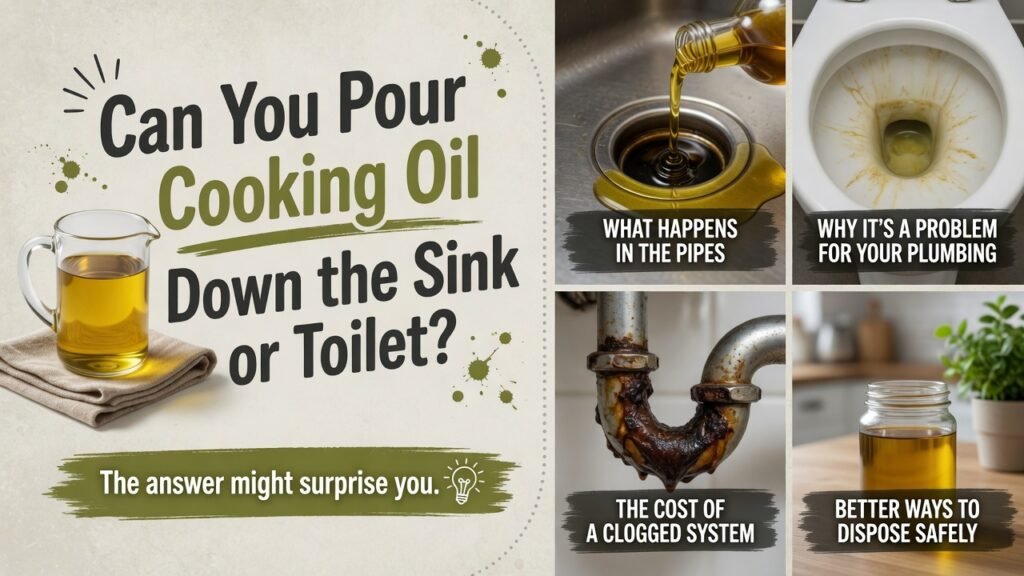
Can You Pour Cooking Oil Down the Sink or Toilet?
The simple answer is no, you should not pour cooking oil down the sink or toilet.
What happens when oil enters your pipes
Cooking oil sticks to pipe walls and slowly builds up. Unlike water, it does not break down easily. Over time, this buildup can block the flow and cause backups.
Why hot oil is especially dangerous
Hot oil may seem easier to pour because it is liquid, but it becomes a bigger problem once it cools.
As the temperature drops, oil thickens and can attach itself to pipes, creating a stubborn layer of grease.
Common myths about flushing oil away
Some people believe adding soap, boiling water, or chemicals will remove oil completely. While these methods may temporarily move oil further down the drain, they do not eliminate the problem.
The oil can still settle and create blockages later.
How to Dispose of Cooking Oil Step by Step
The safest way to dispose of cooking oil at home is to handle it carefully before throwing it away.
Let the oil cool completely
Never handle hot cooking oil immediately after frying. Allow it to cool to room temperature before moving it.
Hot oil can:
- Burn your skin
- Melt plastic containers
- Create spills
Strain leftover food particles
Before storing the oil, remove leftover food pieces using a strainer or filter.
This helps prevent:
- Bad odors
- Faster spoilage
- Messy disposal
Transfer oil into a suitable container
Pour cooled oil into a sealed container such as:
- An old jar
- A plastic bottle
- A non-breakable container with a lid
Avoid using thin bags because they can leak easily.
Seal and throw it away correctly
Once the container is full, close it tightly and place it in your regular trash if recycling is not available in your area.
Make sure the container will not leak inside the garbage bin.
Best Ways to Get Rid of Used Cooking Oil
There are several safe ways to dispose of used cooking oil depending on how much you have.
Throwing oil in the trash safely
For small household amounts, trash disposal is often the easiest option.
Steps:
- Cool the oil completely
- Pour it into a sealed container
- Close the lid tightly
- Place it in the garbage
You can also absorb small amounts of oil using materials like paper towels or cat litter before throwing them away.
Recycling used cooking oil
Recycling is one of the most environmentally friendly options.
Collected cooking oil can sometimes be converted into useful products such as:
- Biodiesel fuel
- Industrial products
- Renewable energy sources
Check whether your local area offers cooking oil recycling programs.
Taking oil to a collection center
Some communities have special drop-off locations where residents can bring used oil.
This is especially useful for:
- Large amounts of oil
- Restaurant oil
- Frequent frying waste
Reusing oil when it is still safe
If cooking oil is still clean and has been stored properly, you may be able to reuse it.
However, oil should not be reused forever. Quality decreases after repeated heating.
How to Store Cooking Oil Before Disposal
Proper storage makes disposal safer and cleaner.
Choosing the right container
Good containers include:
- Glass jars
- Thick plastic bottles
- Original oil containers
Avoid:
- Open cups
- Weak plastic bags
- Containers that may melt
How long can used oil be stored?
Used oil can usually be stored for a short period if it is sealed and kept in a cool place.
Before storing, make sure it:
- Has cooled completely
- Has been filtered
- Is covered tightly
Keeping oil away from heat and children
Store used oil away from:
- Stoves
- Direct sunlight
- Children and pets
A stable storage location reduces the chance of spills.
How to Dispose of Large Amounts of Cooking Oil
Large quantities of oil require more careful handling.
Restaurant and deep-fryer oil disposal
Restaurants and businesses often produce large amounts of used oil. They usually work with recycling companies or waste collection services.
Pouring large amounts into drains can cause major plumbing and environmental issues.
Finding local oil recycling programs
Many areas have programs that collect used cooking oil for recycling.
Search for:
- Cooking oil recycling centers
- Household hazardous waste programs
- Community collection events
Handling gallons of used oil safely
For large amounts:
- Keep oil in strong containers
- Do not mix with water
- Avoid lifting heavy containers alone
- Use proper collection services when possible
Can You Reuse Cooking Oil Instead of Throwing It Away?
Reusing cooking oil can reduce waste, but it depends on its condition.
Signs that oil is still reusable
Oil may be reusable if:
- It smells normal
- It looks relatively clear
- It does not contain burnt pieces
- It has not been overheated
How to filter and store frying oil
To reuse oil:
- Let it cool
- Strain out food particles
- Store in a clean container
- Keep it sealed
Labeling the container with the type of oil and date can help track usage.
When reused oil becomes unsafe
Avoid reusing oil if it:
- Smells bad
- Looks very dark
- Feels sticky
- Produces excessive smoke
Old oil can affect food taste and quality.

Creative Ways to Repurpose Used Cooking Oil
Some used oil can be repurposed instead of discarded.
Making homemade products (where appropriate)
Certain types of used oils may be used in DIY projects, but always research the method carefully before trying it.
Using oil for non-food purposes
Some people reuse certain oils for non-cooking applications, depending on the oil type and condition.
The oil should never be used again for food if it has become degraded.
When repurposing is not recommended
Do not reuse oil that contains:
- Burnt food
- Strong odors
- Contaminants
When in doubt, safe disposal is the better choice.
Common Cooking Oil Disposal Mistakes to Avoid
Avoiding common mistakes can save money and prevent environmental damage.
Pouring oil into drains
This is the most common mistake and can lead to blocked pipes.
Dumping oil outdoors
Oil can contaminate soil and water sources.
Mixing oil with other waste liquids
Combining oil with chemicals or other liquids can make disposal more difficult.
Throwing hot oil directly into garbage
Hot oil can damage trash bags and create safety risks.
Always allow oil to cool first.
Cooking Oil Disposal Methods Compared
| Disposal Method | Convenience | Environmental Impact | Best For |
|---|---|---|---|
| Trash disposal | Easy | Moderate | Small amounts |
| Recycling | Good | Low impact | Eco-friendly disposal |
| Reusing | Easy | Lowest waste | Clean oil |
| Drain disposal | Easy but harmful | Very bad | Never recommended |
Choosing the right method depends on how much oil you have and what disposal options are available.
Frequently Asked Questions About Cooking Oil Disposal
Can I pour cooking oil in the garbage?
Yes, but only after cooling it and placing it inside a sealed, leak-proof container.
What is the fastest way to dispose of frying oil?
The quickest safe method is to cool the oil, store it in a container, and throw it away with regular trash.
Can cooking oil be composted?
Most cooking oils are not recommended for home composting because they can slow decomposition and attract pests.
How do I dispose of oil without a container?
You can absorb small amounts with paper towels or another absorbent material and place it in the trash.
Can I recycle vegetable oil?
Yes, many recycling programs accept vegetable oil and convert it into useful products.
What should I do with old olive oil?
Old olive oil should be treated like other used cooking oils. Store it safely and dispose of it properly.
Is it okay to pour small amounts of oil down the drain?
It is better to avoid it. Even small amounts can build up inside pipes over time.
Final Tips for Safe Cooking Oil Disposal
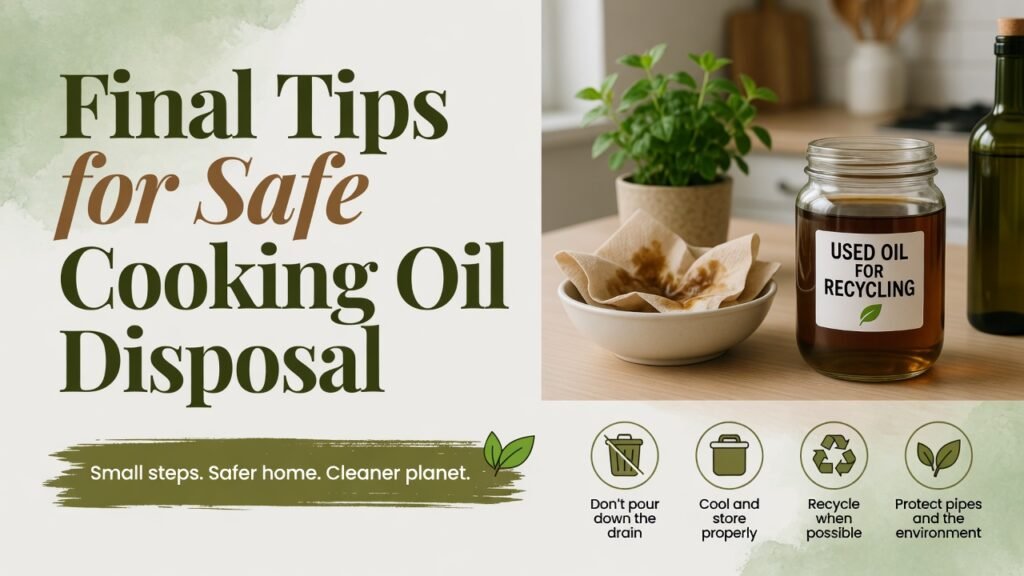
The easiest habit is simple: never pour used cooking oil into the sink.
Instead:
- Let it cool
- Store it in a sealed container
- Recycle it when possible
- Throw it away safely if recycling is unavailable
Proper cooking oil disposal protects your plumbing, reduces pollution, and keeps your home and environment cleaner.