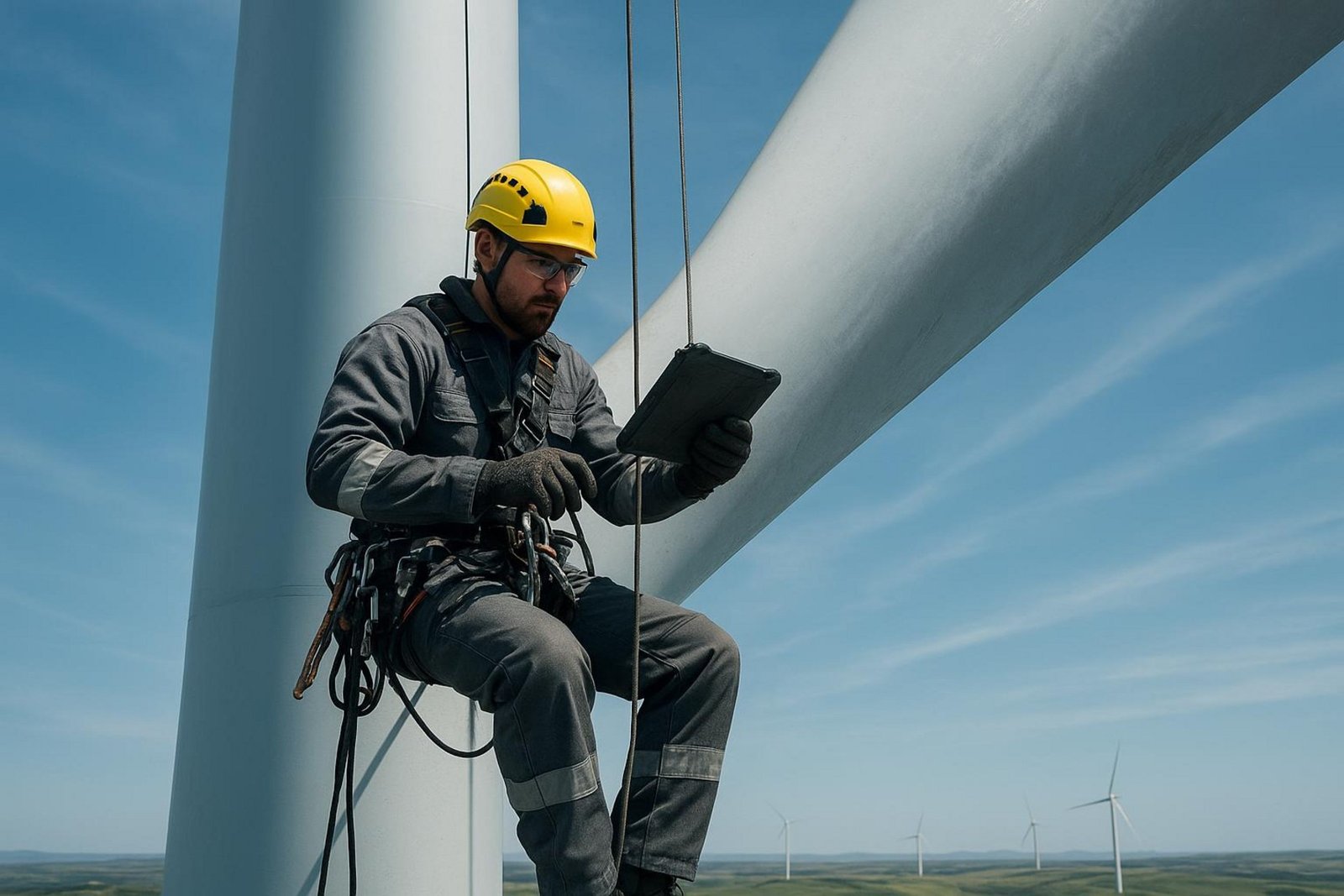
Rope access inspection is often quicker than older inspection methods because it takes far less time to set up, bring to site, and pack away. It is also very flexible for reaching awkward or high-up areas.
Unlike large scaffolding systems or heavy lifting equipment that need a lot of planning and time to build and remove, rope access gear can usually be set up and taken down fast, often within one shift.
This speed helps the inspection move faster and reduces disruption to normal site work, which is why many teams now choose it for industrial and building checks. For a closer look at these methods, you can explore rope access inspection services.
What Is Rope Access Inspection?
Rope access inspection is a specialist way to reach high or hard-to-reach places to carry out jobs like maintenance, repairs, and inspections. It started with techniques used in climbing and caving and has grown into a well-known industrial method.
Trained technicians use ropes, harnesses, and purpose-built equipment to move safely up, down, or across a structure. It works well on bridges, towers, wind turbines, oil and gas sites, and offshore platforms, where scaffolding or cranes may be impractical or too expensive.
How Does Rope Access Inspection Work?
Rope access inspection is carried out by trained and independently certified technicians. Many are certified through groups such as the Industrial Rope Access Trade Association (IRATA) or the Society of Professional Rope Access Technicians (SPRAT). They use a two-line system: one main working line and one separate backup safety line.
Along with training in using equipment and dealing with emergencies, this approach lets them carry out detailed non-destructive testing (NDT) in areas that are difficult to reach by other methods.
Common NDT methods done using rope access include:
- Visual Inspection (VT)
- Magnetic Particle Testing (MT)
- Dye Penetrant Testing (PT)
- Ultrasonic Testing (UT)
- Positive Material Identification (PMI)
- Hardness Testing
These checks help build a clear picture of the condition of the structure or asset.
How Do Traditional Inspection Methods Work?
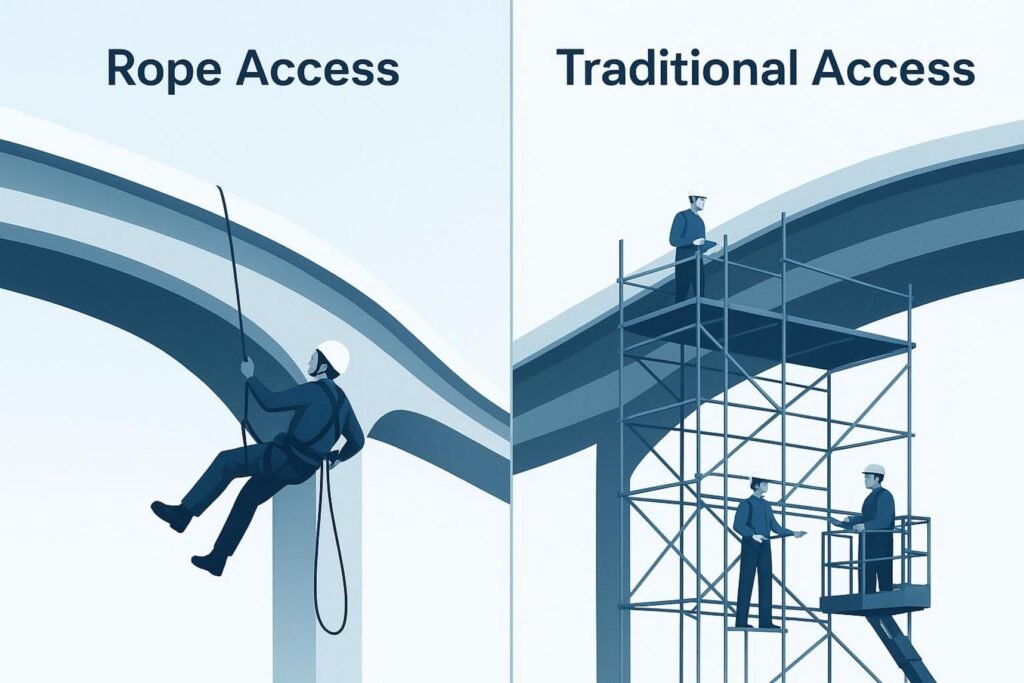
Traditional inspection methods usually use scaffolding, aerial work platforms (such as single man-lifts), or cranes to reach high areas. These methods have been used for decades and can provide a stable platform for workers and tools. They are often used for large construction jobs or long façade projects where teams need long-term access or heavy equipment.
However, they often come with practical issues, longer timeframes, and a need for more space, which can slow the job down.
What Are Common Traditional Inspection Techniques?
Scaffolding is one of the most common older methods. It involves building a temporary metal or wooden frame from the ground up around a structure. Workers reach height by climbing or walking on the platforms. Lifts and cranes can also be used to position workers at height, from small man-lifts to large tower cranes.
While these options can give a stable work area for jobs like painting, brickwork, and repairs, they require a lot of planning, long setup times, and plenty of physical space.
This can lead to problems such as:
- Blocked entrances and walkways
- Restricted access to shops or work areas
- More noise and disruption for longer periods
- Longer project times, which can frustrate tenants and businesses
Rope Access Inspection vs. Traditional Inspection Methods
Side by side, rope access and older methods like scaffolding or lifts work in very different ways. Traditional access can be better for major construction where a wide platform is needed for heavy work. Rope access is usually better for inspections and light maintenance because it is fast, flexible, and needs very little space at ground level.
Which Factors Affect Inspection Speed?
A few key points affect how long an inspection takes:
- How difficult the access is
- How much equipment is needed
- How many people are needed
- How long setup, arrival, and pack-down take
Traditional methods often need larger teams and more equipment, which slows these stages down. Rope access usually needs fewer people and less gear, which helps the work start sooner and finish sooner.
What Preparation Time Is Needed for Each Method?
This is one of the biggest differences. Scaffolding can take hours, days, or even weeks to build, depending on the size and location. Rope access gear is portable and can often be set up in minutes, so technicians can begin the inspection much sooner. This is especially useful for urgent checks or work with tight deadlines. Aslan Energy notes that rope access can cut setup and pack-down time by up to 70%.
How Do Mobilization and Demobilization Times Compare?
Rope access stays quicker even after the first setup. Ropes can often be installed and removed within a single shift. On multi-day jobs, teams can take the system down at the end of each day, leaving little equipment on site and reducing the need for overnight security.
Traditional methods usually take longer to assemble and remove, which extends the overall schedule and increases labour costs. Faster pack-up also means the site can return to normal sooner.
How Does Access Flexibility Impact Overall Efficiency?
Rope access lets technicians reach tight or awkward spaces that scaffolding struggles with. They can move up, down, and across a building face in a controlled way, getting close enough to carry out detailed checks on materials like masonry, steel, and glazing seals. This is useful on buildings with features like ledges, domes, and detailed designs.
Being able to get close to the surface also gives a level of detail that drones or long-range photos may not provide on their own, which improves the quality of the inspection while keeping the job moving.
Why Is Rope Access Inspection Faster Than Traditional Methods?
Rope access is faster because several time-saving benefits work together. It is not just one reason. The method cuts delays that often come with large access systems and makes it easier to reach the right areas quickly.
Reduced Setup and Takedown Time
The biggest time-saver is how quickly rope access can be set up and removed. Scaffolding can take days or weeks to build and can take up large areas at ground level. Rope access systems are often ready in minutes and can usually be fully removed within one shift. Cutting setup and pack-down time by up to 70% can save many hours across a project. Less time on logistics means more time spent on the inspection itself.
Minimal Disruption to Site Operations
Older access methods often mean closing areas, changing traffic routes, or stopping normal work, which creates downtime and can reduce income. Rope access uses compact equipment and keeps ground-level disruption low.
Inspections can often be done while the site stays open, such as the Glen Road bridge in Toronto, which remained open during inspections. This helps busy buildings and industrial sites avoid scheduling work around closures and keeps day-to-day activity running.
Quick Response for Both Scheduled and Emergency Inspections
Because rope access teams can arrive and get started quickly (with proper planning and safety controls), they are useful for routine checks and urgent call-outs, such as leaks or sudden structural concerns.
In many cases, a team from Rope Access in London can be on site and working long before scaffolding or lift equipment could even be arranged. This speed helps stop small problems from turning into bigger, more expensive issues later, saving time and money over the long term.
Easier Access to Hard-to-Reach Areas
Rope access works well where scaffolding or cranes may not. Tall towers, confined spaces, complex structures, and remote locations can often be reached by certified rope access technicians using suitable anchor points. This direct access reduces the need for slow workarounds and makes close-up inspection possible right away.
Being able to do hands-on checks also helps spot problems early and deal with them sooner, supporting the condition and safety of the structure.
Additional Benefits of Rope Access Inspection
Speed is a major benefit, but rope access also brings other advantages that appeal to facilities managers and project leads. These include lower costs, less impact on the site, and strong safety systems.
Cost Savings from Faster Project Completion
Because rope access often needs fewer people, less equipment, and less downtime, it can cost much less than scaffolding or crane access. In many cases, rope access inspections are around 30-80% more cost-effective than traditional methods. There are no large build-and-remove costs for access structures, no major transport requirements for heavy equipment, and often fewer rental charges. Faster completion also reduces labour time and helps avoid revenue loss caused by site shutdowns.
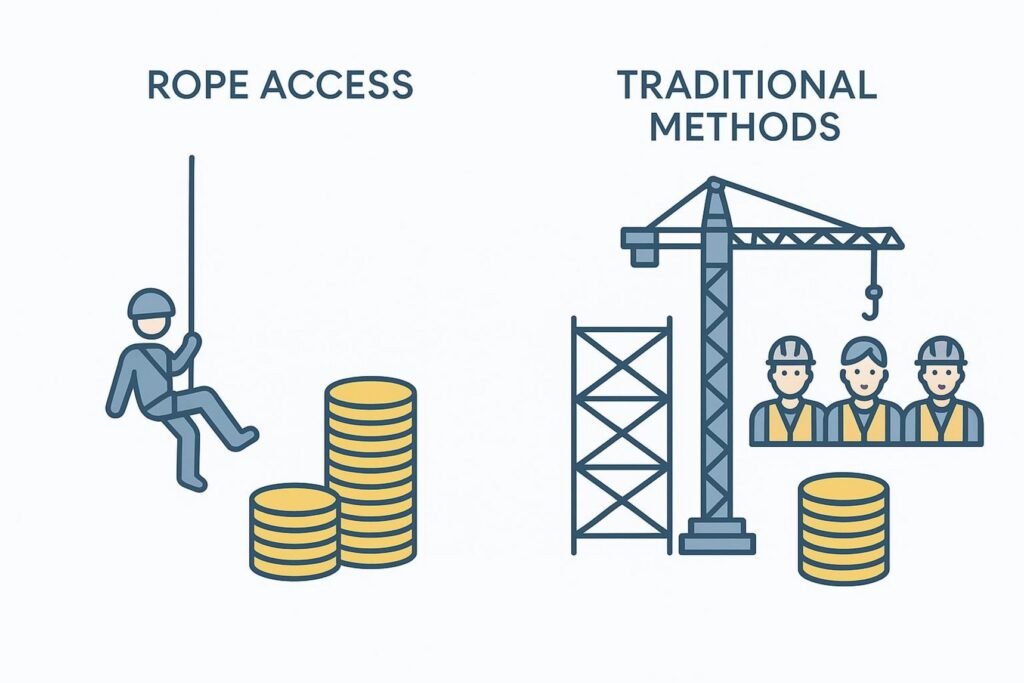
Another cost benefit is that rope access technicians are often trained in more than one skill, so some tasks can be done in the same visit without bringing in extra contractors, which can lower the overall project cost.
Frequently Asked Questions About Rope Access Inspection
As rope access becomes more common in industrial maintenance and inspection, people often ask how much time it can save and what effect it has on day-to-day operations.
How Much Time Is Typically Saved with Rope Access?
The time saved depends on the size and difficulty of the job, but rope access can cut overall project time by reducing setup and pack-down time by up to 70% compared to scaffolding. That can mean work taking hours or days instead of weeks for jobs that would otherwise need major access planning and long build times. Faster access also helps teams find and fix issues sooner, stopping them from becoming larger structural problems that take longer and cost more to repair. On top of this, because rope access often lets sites stay open and working, businesses can avoid shutdowns, keeping productivity steady while the inspection is completed.